
12 | 2026 – BAŞKA BİR YERDE /WOANDERS
2nd and 3rd of December @ ARTER ISTANBUL, Museum of Modern Arts
Performers: Masha Qrella, Serap Sönmez (Koma Amed), Fulya Uçanok, Metin and Kemal Kahraman, Tarık Aslan, Andreas Bonkowski
Concept: Masha Qrella, Diana Näcke, Christina Runge
Translation of the Thomas Brasch Poems: Efe Duyan
Video Director and Video Mapping Artists: Diana Näcke, Can Memişoğulları
Sound Design: Torsten Schwarzbach
Executive Producer: Ayşe Çetinbaş
Assistent of Production: Ezgi Beyazgül
Production: Masha Qrella, Diana Näcke, Ayşe Çetinbaş Co-Production: HAU Hebbel am Ufer Berlin, WUK Wien, Arter Istanbul, Kulturakademie Tarabya, Goethe Institute Istanbul and Munich
Somewhere Else
“What I have, I do not want to lose, but where I am, I do not want to stay, but those I love, I do not want to leave, but those I know, I no longer want to see, but where I live, I do not want to die, but where I die, I do not want to go: I want to stay where I have never been.” (Thomas Brasch, 1976)
Concert – Performance – Installative Text Space
Engaging with the writings of Thomas Brasch
WOANDERS – Başka Bir Yerde is a work at the intersection of concert, performance and installation. At its heart are poems by Thomas Brasch, translated into Turkish by Efe Duyan. The evening is conceived not simply as a concert or a musical dialogue between cultures, but also as an immersive textual space that invites audiences to experience the power and resonance of Brasch’s language — a language that first moved Berlin-based musician Masha Qrella to set Brasch’s words to music and now inspires her to explore how they might resonate in a different social and historical context, and what new perspectives they might open up.
Together with her fellow musicians, Qrella transforms Brasch’s powerful, poetic words into contemporary, atmospheric songs. Joined by musical guests including Serap Sönmez (Koma Amed), Metin and Kemal Kahraman, Fulya Uçanok and Tarık Aslan, she presents a range of musical interpretations of Brasch’s poetry, introducing his work to an Istanbul audience in this form for the first time. Video projections by Diana Näcke and Can Memişoğulları expand the concert into an immersive textual space that explores, among other things, loneliness as a political condition.
“The loneliness of two people, or of one, is always loneliness in a particular place. It is always a life without help, always a life without solidarity, always a life without talking to one another … Loneliness, as I understand it, is always political, and it becomes reactionary the moment you say it is a psychological matter.”
(Thomas Brasch, 1988)
Thomas Brasch grew up in the GDR (East Germany) and died in a reunified Germany in 2001. He was a writer, poet, playwright, screenwriter and film director. In 1976, having been forced to leave the GDR for political reasons, he went West, like many other artists critical of the regime. Yet he never truly arrived there.
His poems, films and plays speak of a life between worlds: between East and West, past and present, belonging and estrangement. They explore the enduring struggle to resist appropriation and to evade the identities imposed by political systems and society. A utopian thinker and rebel, Brasch felt betrayed by both his own father and his own country. Yet he remained equally uncompromising in West Germany, refusing the role assigned to him as an East German émigré and political dissident. Instead, he became one of the Federal Republic of Germany’s most important critical voices in cultural and political debate.
At the same time, Brasch felt a profound affinity with the Turkish diaspora in West Berlin, sharing its experience of displacement, divided loyalties and the search for a place to call home.
“You choose the city you cannot choose, the city you are.
Where else am I supposed to go?
It is the city where I am allowed to be naked and must be clothed.
It is the city where my school, my language and my home are.
It is the city that protects me, where I can hide and discover myself.
The city is a railway station, a place where you can live and want to leave. That is to say, the most comfortable place to stay that this century has to offer. That is to say, the place where you are at home but do not want to stay at home …”
(Thomas Brasch, year to be confirmed)
WOANDERS – Başka Bir Yerde sets out to explore the ground on which Thomas Brasch’s poetry might fall in Turkey, seeking points of connection between different biographies shaped by social transformation and its emotional consequences. What experiences, contradictions and longings do these lives share? What remains of the utopias that once inspired them, and what forms of belonging are still possible in a world marked by upheaval and uncertainty?
At the same time, the evening seeks to counter the experience of loneliness with an encounter: an artistic meeting in which different perspectives come together to tell stories of life between worlds, of searching for lost utopias and of finding a way to navigate the contradictions of our time. Through music, poetry, images and language, WOANDERS – Başka Bir Yerde creates a space for shared experience without erasing difference — a space in which estrangement can become a starting point for solidarity and dialogue.
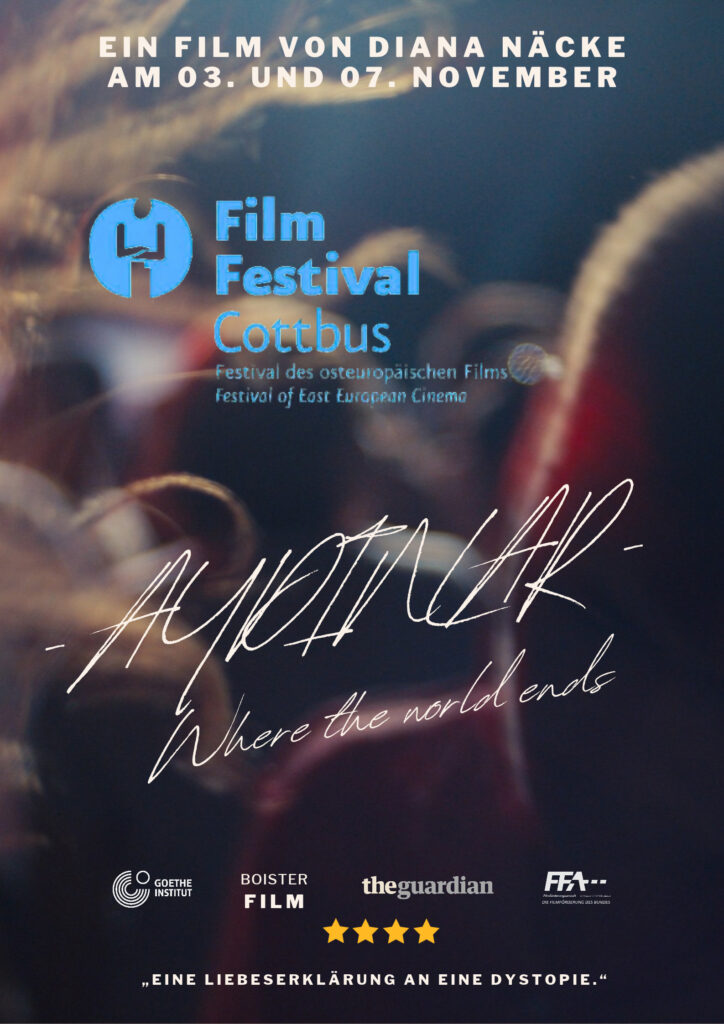
11 | 2026 – AYDINLAR – WHERE THE WORLD ENDS
ECOEAST Section @ Film Festival Cottbus / 3rd and 7th of November
Documentary, 78 min, BOISTER Film Production
Author / Director: Diana Näcke
DOP / Editor: Diana Näcke
Fixer / Translator: Gulnoza Nabieva
Sound Operator / Composer: Masha Qrella
Sounddesign / Soundmix: Dominik Avenwedde
Color Correction, Titles, DCP: Knut Schmitz
with the support of FFA, The Guardian and Goethe Institute Tashkent
09 | 2026 – AYDINLAR – WHERE THE WORLD ENDS
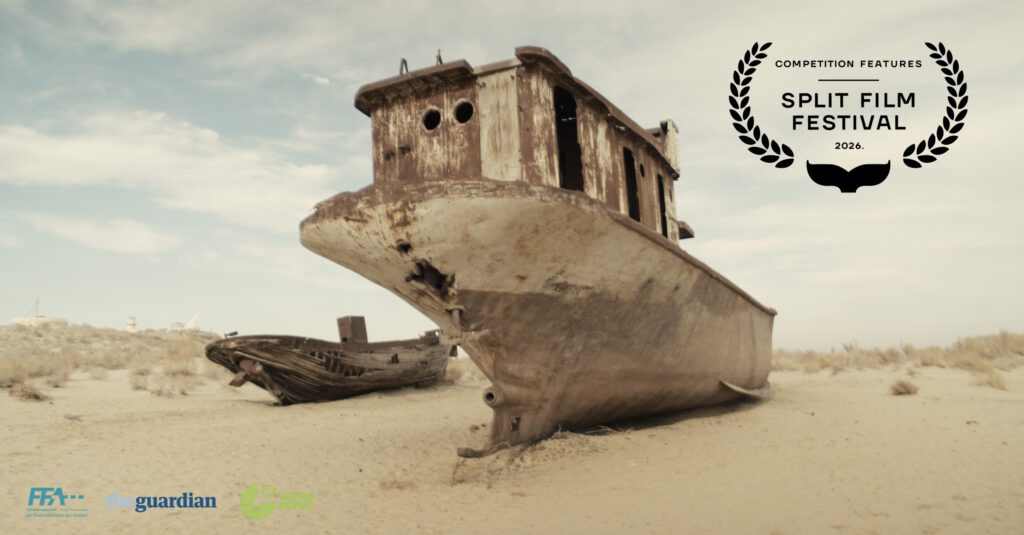
International Competition @ Film Festival SPLIT / 11. – 18 September
SYNOPSIS
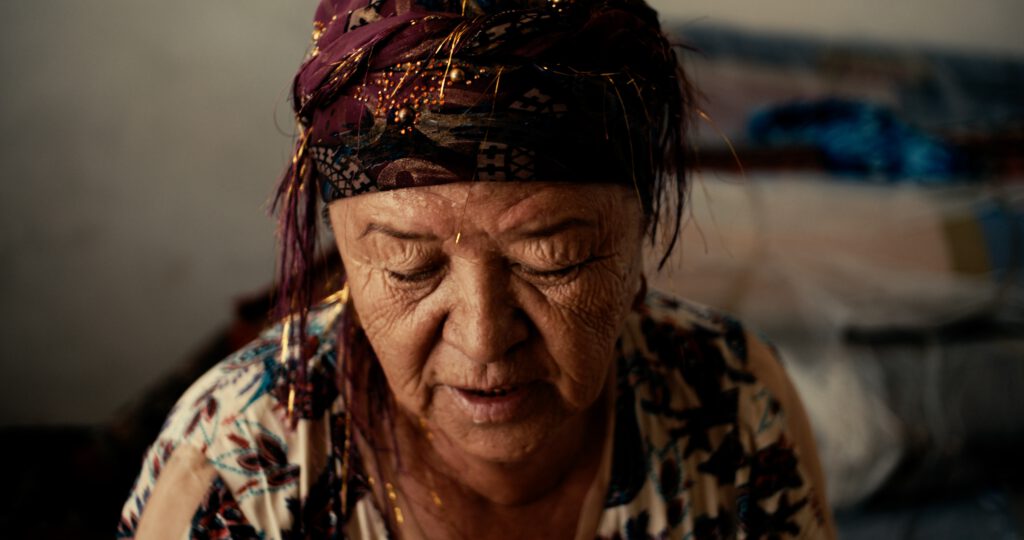
“They say it will return …”, the old lady sits on the ground, her gold teeth glinting, her skin weathered by the wind: “We all swam in the sea. The water receded slowly. No one believed it would vanish completely. But the sea is gone.”
Transparent plastic fish glisten in the sun. A toddler sleeps on the floor. Old fishing boats rot in the sand. Wind whistles through rusted holes. “They say our sea dried up twice before. If it returns a third time, we won’t let it go again.”
Her children and grandchildren grew up in a salt desert without ever having seen the sea. Still, they keep singing the old fishermen’s songs she once sang while rocking them to sleep. They play among the stranded shipwrecks, now monuments to a vanished world.
Moynaq, today a dark-tourism destination in the Aralkum Desert, was once a port town on the Aral Sea – now the water lies 150 kilometres away. The town is located in Karakalpakstan, an autonomous republic within Uzbekistan, a region without a future, or so it seems. Since the 1960s, the sea has shrunk to around five to ten percent of its original size. The elderly still remember swimming in it. “The sea has dried up twice and come back,” they say – though they hardly believe it themselves anymore. The young leave town to work in Russia. Those who stay behind are the ones who make something of it: people like Bibisara, 70, who has just opened a private kindergarten. Meanwhile, the mayor is paving roads, opening an IT centre and an amphitheatre, and speaking of a golden future. Not far away, the remains of Vozrozhdeniya Island – “Rebirth Island” – lie rotting beneath the earth, where the Soviet Union once conducted animal experiments with biological warfare agents such as anthrax and plague.
09 | 2026 – ERÖFFNUNG GALERIE AM PRATER – Filminstallation
Teil der Eröffnung sind vier kleine Filme, die in die Geschichte der Galerie am Prater eintauchen und die vier ehemaligen Leiter*innen porträtieren.
Regie: Diana Naecke und Lena Prents
Kamera: Susanne Schüle
Montage:: Diana Naecke
In Ko-Produktion mit der Galerie am Prater und mit der Unterstützung des Berliner Bezirksamtes

08 | 2026 – MUSIC VIDEO RELEASE – KAMERUN QRELLA GROUP, Staatsakt Berlin
Abteilung blühende Landschaften erscheint am 20.11.2026. Das Album bringt Mashas Pop-Feeling und Schorschs Agit-Gesang im Wiedervereinigungs-Duett zusammen.
KAMERUN QRELLA GROUP
Hinter der KAMERUN QRELLA GROUP stecken die Musikerin Masha Qrella und der Musiker Schorsch Kamerun (Die Goldenen Zitronen). Auf ihrem für den 20. November 2026 angekündigten Debütalbum „Abteilung Blühende Landschaften“ beschreiben sie im künstlerischen Dialog die Geschichte der bundesrepublikanischen Wiedervereinigung und deren Folgen – den einst darin eingeschriebenen Versprechen, Hoffnungen und bröckelnden Utopien. Dem kulturpolitischen Scheitern und den damit verbundenen Verletzungen setzen sie ein sprach- und musikstarkes Miteinander entgegen, das zutiefst an verbindende Kreativität glaubt. Diese Top-GROUP wird gebraucht, sie macht Ost-West-Popkultur mit Gemeinsamkeit als Strategie!
Gegründet hat sich die Gruppe im Rahmen der Veranstaltungsreihe „Ost-West-Kantine“ in der Berliner Akademie der Künste. „Weil das alles, trotz oder gerade wegen der Unterschiede und Missverständnisse, auch so viel Spaß und Sinn gemacht und sich wie ein Anfang angefühlt hat, haben wir begonnen, gemeinsam Stücke zu schreiben“, sagt Masha Qrella über ihre neue Gruppe. Kamerun ergänzt: „Achtung, Selbstzitat: „In einer sicher komplexen Zeit / Sind die einfachsten Ideen / Nicht die einzige Möglichkeit / Um gemeinsam abzugehn‘.“
„Wer schließt hier wen aus und wer drängt wo wen raus?“, fragen sie uns auf der ersten Single „An den Reglern“ und untersuchen Positionen im Kulturbetrieb im Hinblick auf die Vita seiner Verantwortlichen. Wie viele erfolgreiche Bands mit Ost-Sozialisation gibt es aktuell?! Wie viele Moderator*innen in den Tagesthemen?! Und warum müssen wir diese Unterscheidungen überhaupt noch machen?! 37 Jahre nach dem Mauerfall. Müssen wir das wirklich immer noch unterscheiden?! Also Ost und West? Und singen: „Und du bist nicht mein Bruder / Und du bist nicht meine Schwester / Wir sind nicht euer Vater / Und schon gar nicht euer Land“. Trotzdem: „Physischer Zusammen-raum / Soll nicht ausgeträumter Traum“.
Mit Masha Qrella hat die Group eine erfolgreiche Indiepop-Expertin mit ostdeutscher Sozialisation (Mina, Contriva) an Board und mit Schorsch Kamerun einen Lautsprecher der Subkultur von BRD1 (Porsche, Genscher, Hallo HSV!) bis nach Berlin-Mitte (Volksbühne Berlin). Musikalisch bewegen sie sich zwischen Indiepop und Agitprop mit elegantem Gerassel und Postpunk-Bässen, zwischen Harmoniegesängen und Mehrstimmigkeiten, aber es wird sich auch bewusst gegenseitig ins Wort gefallen. Ein glamouröses Wiedervereinigungs-Drama! Ein raufender Track wie „Lucy“ könnte locker auch von den Goldenen Zitronen sein, während sich die KAMERUN QRELLA GROUP im Song „Avantgarde“ fast schon in ABC-Popgefilde traut und inhaltlich vor jenem warnt, was heute aus dem Erbe von Stockhausen, Cage, Pauline Oliveros oder den Darmstädter Kursen teils schwer eingemottet meist eher in den Hochkulturhäusern spielt. Das „Besondere“ als Distinktionsbetrieb. Bei aller Liebe zur Mikrotonalität und Minimal Music! „Freies Tanzen kann aber auch verrenken“, heißt es in dem Song – „Ik gloob ik spinne!“.
„Das ist die größte Berührung, die ich je erlebt hab’“, spricht Masha Qrella zum Geplocker eines DAF-Sequenzers im vielleicht dringlichsten Stück des Albums: „Libellen“: „Ich schenke dir Aufmerksamkeit, auch um mir selbst zu helfen“, und „verbundene Erzählung schafft gemeinsamen Widerstand“, heißt es da. Zwischenmenschliche Begegnungen als politische Strategie. Bitte alle jetzt ihr Handy an der Garderobe abgeben.
Kurz: Die KAMERUN QRELLA GROUP überführt Diskurse über „Zugehörigkeit“ in eine neue, fantastische Indiepopwelt. Die mit den hübschen Insta-Kacheln. Und den ganzen Fördermitteln. Also in uns alle! All die seit fast 40 Jahren erfolgreich verdrängten Fragen zu Identität und Zugehörigkeit, Bedürfnissen und Befindlichkeiten werden auch nach den nächsten Landtagswahlen sicher nicht zu Ende beantwortet sein. Wir müssen uns also weiterhin diesen Fragen stellen. Im Jugendzentrum und im Job, der Kultur und dem Miteinander, bei der Bildung und Bio-Bäcker. Sonst gibt es kein kollektives Weiter! Und wo es kein Weiter mehr gibt, da lauert öder Stillstand oder Barbarei – als ziemliches Gegenteil von „Blühenden Landschaften“.
(Text: Conne Island, Leipzig)
Präsentiert von Musikexpress, ByteFM & Musikblog.de
06 | 2026 – PHOTOSHOOT – KAMERUN QRELLA GROUP – Staatsakt Berlin
07 | 2026 – POSTPRODUCTION – AYDINLAR -WHERE THE WORLD ENDS
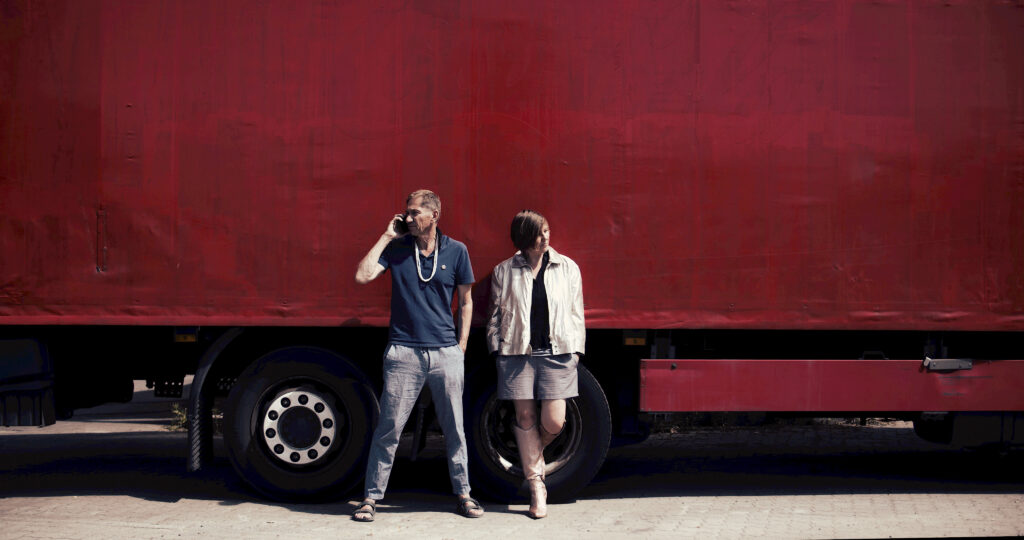
Sounddesign und Kinomischung: Dominik Avenwedde
Color Grading, Titles, DCP: Knut Schmitz

01 -06 | 2026 – AYDINLAR – WHERE THE WORLD ENDS
Postproduction / Editing Process
Documentary, 78 min, 2026
A tender portrait of a dystopia whose inhabitants mourn the loss of an ocean while holding fast to their belief that it will return one day.
Author / Director: Diana Näcke
with the support of FFA, The Guardian and Goethe Institute Tashkent


06-11 | 2025 – HEART FAILED / FESTIVALS
The music video for Masha Qrella’s “HEART FAILED” is being screened at the following festivals:
- American Documentary And Animation Film Festival („Best Music Video“)
- Filmfest Dresden International Short Film Festival
- BAIFF-Burano AI Film Festival Venice
- Courant3D / FINECAA Festival Angoulême
- Puerto Aventuras International Film Festival Riviera Maya („Best Music Video“)
- Larissa Lumina AI Short Film Festival
- Miami Art Tech Submit: AI & VR FILM VISIONARIES @Art Basel Miami Beach
- AI-Artist Festival Peking (Best Artistic Music Video)
- Canberra Short Film Festival
- Music Imbizo Film Festival Durban
- SIAFF Seoul International AI Film Festival
- GOSH! International Film Festival
- International Music Video Festival Paris
- International Shortfilm Festival SAO Paulo
- Art All Night Film Festival Trenton
- Europe Music Video Awards
- Hanyang International Shorts Awards Seoul
- MiX – International Festival of LGBTQ+ Cinema and Queer Culture Milano
- Golden Bridge Istanbul Short Film Festival
- Asia South East Short Film Festival Phnom Penh (Best Music Video)
- AI New Media Digital Arts Film Festival London (Best Music Video)
- MATE Music Video Awards Coimbra
- Rome Prisma Film Awards
- International Film Festival Sydney (Best Music Video)
- AI Film and Art Festival Arizona („Best Music Video“)
- BANGIFF – BangkokThai International Film Festival („Best Music Video“)
- Barcelona Planet Film Festival („Best Music Video“)
- UUCP Film Festival
- Festival de Cine Auto Cine El Sur Mutxamel
- FICIMAD („Best Experimental Music Video“)
- Stafford Film Festival
- Porto Music Video Festival

© wenn nicht anders angegeben: Fotos / Filmstills von Diana Naecke